How to Complete a Government Exam Syllabus Without Getting Overwhelmed
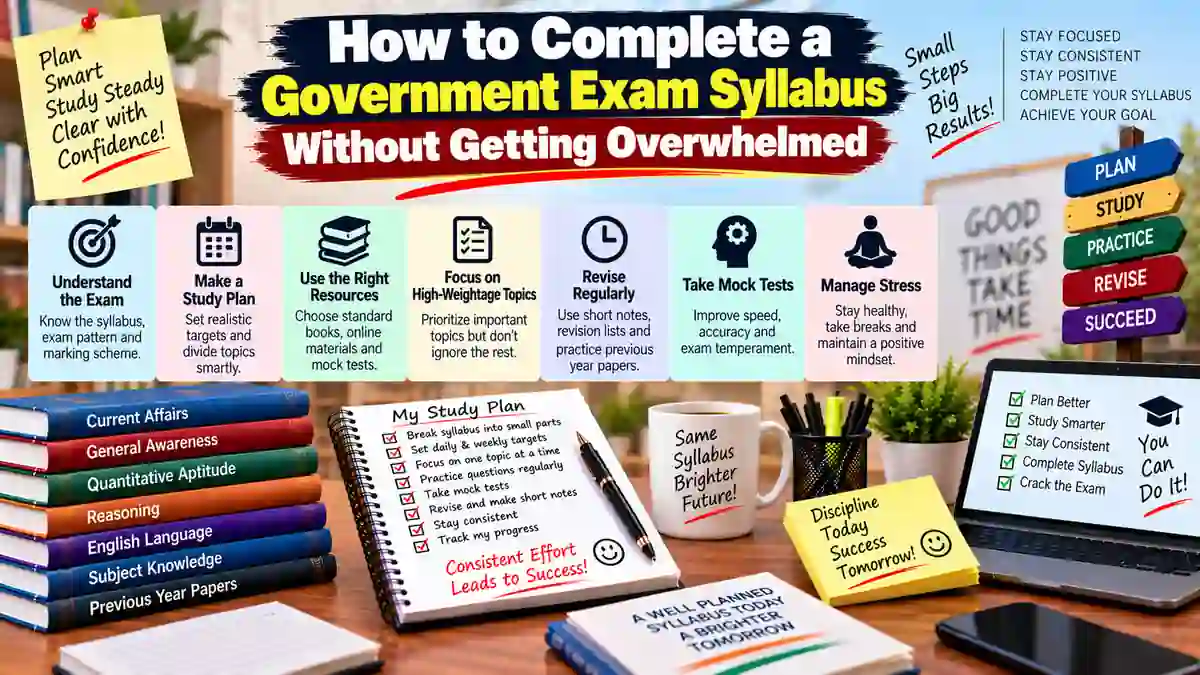
A large government exam syllabus can look difficult when you see all the subjects and topics together. Many aspirants feel overwhelmed because they think they have to complete everything at once. This often leads to constantly changing study plans, jumping between subjects, or spending too much time on a single topic.
A better approach is to break the syllabus into smaller parts and work through them systematically. You do not need to study everything in one sitting. You need a clear plan that tells you what to study, when to revise it, and how to measure your progress.
Start by Understanding the Complete Syllabus
Before beginning serious preparation, go through the syllabus of your target examination. Write down every subject and divide each subject into individual topics.
Seeing the syllabus as a list of smaller topics makes it easier to understand the actual workload. It also helps you identify subjects that require more preparation time.
If you have not yet created a structured routine, you can use the principles explained in our government exam study timetable guide.
Divide the Syllabus Into Smaller Parts
Do not treat an entire subject as one task. Break it into manageable study units. For example, instead of writing "Quantitative Aptitude" as one task, divide it into topics such as percentages, averages, ratios, profit and loss, and other topics included in your examination syllabus.
This gives you smaller goals that can be completed one by one. Each completed topic also gives you a clear indication of your progress.
A similar approach can be used for reasoning, English, general awareness, and other sections.
Prioritize Topics Instead of Treating Everything Equally
Not every topic needs exactly the same amount of study time. Some topics may be more familiar to you, while others may require considerably more practice.
Use the syllabus, previous-year questions, and practice tests to understand where you should spend more time. Topics that repeatedly cause mistakes should receive additional attention.
You can also learn how to identify your weak subjects before a government exam and use the results to adjust your study schedule.
Create a Realistic Completion Plan
Once the syllabus is divided into topics, decide how many topics you can realistically cover each week. Avoid setting a target that looks impressive on paper but is difficult to maintain.
For example, if you have several months before the examination, divide the syllabus across that period and leave dedicated time for revision and practice. Do not use the entire available period for learning new topics.
Your plan should include three stages:
- Learning new topics
- Practicing questions
- Revision and testing
This prevents the common problem of finishing the syllabus but having no time left to revise it.
Focus on One Study Task at a Time
Feeling overwhelmed often comes from thinking about the entire syllabus while trying to study one chapter. Instead, concentrate on the task immediately in front of you.
If today's target is one topic, focus on understanding that topic and completing the planned practice. You do not need to think about all the remaining subjects during that study session.
Once the topic is completed, mark it as finished and move to the next planned task.
Use Previous-Year Questions While Studying
Previous-year questions can help you understand how topics are actually tested. They can also prevent you from spending excessive time studying material that is less relevant to your target examination.
After completing a topic, solve questions related to it whenever possible. This helps you identify whether you have actually understood the concept or only read about it.
Read more about the importance of previous-year question papers for government exams before building your practice strategy.
Do Not Wait to Finish the Entire Syllabus Before Practicing
Some aspirants postpone question practice until they have completed every subject. This can make preparation less effective.
Start practicing questions as soon as you have covered the relevant basics. Regular practice helps identify mistakes early and shows which topics need another round of study.
For daily practice, you can also follow the best way to practice government exam questions every day.
Keep a Separate Revision List
When you complete a topic, do not assume that it will remain fresh in your memory until the examination. Maintain a list of topics that require revision.
Your revision list can include:
- Topics you frequently forget
- Questions you answered incorrectly
- Important formulas or rules
- Concepts that take longer to understand
- Topics that need additional practice
Creating short notes for competitive exam preparation can make these revision sessions faster and more convenient.
Use Weekly Revision Instead of Starting Over
At the end of each week, spend some time reviewing the topics covered during that week. This is easier than waiting until the end of the syllabus and trying to remember everything at once.
A simple weekly cycle can include new topics on most study days, followed by a revision session at the end of the week. This keeps previously completed topics active while you continue moving through the syllabus.
For a broader revision strategy, see how to revise the government exam syllabus effectively.
Use Mock Tests After Building Enough Coverage
Mock tests become increasingly useful once you have covered a reasonable portion of the syllabus. They can show whether your preparation is translating into actual performance.
Do not become discouraged by a low score in an early mock test. Instead, examine which subjects and topics caused problems.
Learning how to analyze your government exam mock test score can help you turn test results into specific study tasks.
Do Not Spend Too Long on One Difficult Topic
A difficult chapter can consume a large amount of preparation time if you keep trying to perfect it before moving forward. If you are repeatedly struggling with one topic, identify the exact concept causing the problem and work on that part separately.
Once you have reached a reasonable level of understanding, continue with the rest of the syllabus and return to the difficult topic during revision.
This keeps one challenging topic from stopping your overall progress.
Track Syllabus Progress Visually
A simple progress tracker can make a large syllabus feel more manageable. Create a list of subjects and topics and mark each one according to your progress.
| Status | Meaning |
|---|---|
| Not Started | Topic has not been studied yet |
| Learning | Currently studying the topic |
| Practiced | Basic study completed and questions attempted |
| Needs Revision | Topic requires another review |
| Strong | Topic has been revised and performance is satisfactory |
The purpose is not to create a complicated tracking system. It is simply to know what has been completed and what still requires attention.
Adjust the Plan When Necessary
A study plan is not a contract that can never be changed. College, work, family responsibilities, health, or other commitments can affect your available study time.
If you fall behind, do not try to complete several days of missed work in one day. Recalculate your remaining schedule and continue from the current position.
If you are preparing alongside a full-time job, our guide on planning government job preparation around a full-time job can help you build a more practical routine.
Avoid Comparing Your Syllabus Progress With Others
Every aspirant starts with different levels of knowledge and has different amounts of time available for preparation. Comparing your daily study hours or completed topics with another candidate can create unnecessary pressure.
Instead, compare your current performance with your own previous results. The important question is whether your understanding, practice, accuracy, and revision are improving.
Complete the Syllabus Without Trying to Perfect Everything
Completing a government exam syllabus does not mean memorizing every detail on the first attempt. Your preparation should move through multiple cycles of learning, practice, revision, and testing.
Break the syllabus into smaller topics, prioritize areas that need more attention, practice questions regularly, and keep revising completed sections. When a topic feels difficult, avoid letting it stop your overall progress.
A large syllabus becomes much easier to manage when you focus on one realistic task at a time. Consistent progress, rather than trying to finish everything immediately, is what helps turn a long syllabus into a workable preparation plan.